Grand Cayman is one of the Caribbean’s premier scuba destinations, with more than 150 dive sites, warm water from about 78°F in winter to 86°F in late summer, and visibility that commonly runs 60–100 feet. You can dive sheer walls, the USS Kittiwake wreck and the famous shallows of Stingray City, and conditions are diveable year-round — with the calmest seas and clearest water roughly December through May.
Key takeaways
- 150+ dive sites around Grand Cayman, from shallow reefs to deep wall dives.
- Water is warm all year (roughly 78–86°F); a 3mm wetsuit suits most divers.
- Best visibility and calmest seas: about December–May; diving is possible year-round.
- Signature dives: the West Wall, the USS Kittiwake wreck, and Stingray City.
- Cayman’s Marine Parks have strict rules — no gloves, no touching coral, take nothing.
Whether it is your first breath underwater or your thousandth logged dive, Grand Cayman packs world-class diving into a compact, easy-to-reach island. Here is what you actually need to know before you get in the water.
What makes Grand Cayman so good for scuba diving?
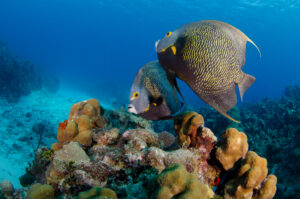
Grand Cayman offers more than 150 marked dive sites in a small area, so most are a short boat ride from Seven Mile Beach. According to PADI, the island is best known for dramatic wall diving, healthy coral and consistently clear water.
The walls are the headline act: the reef edge typically drops away at around 50–60 feet and plunges into deep blue. The West Wall, running parallel to Seven Mile Beach, is the most-dived stretch thanks to its sheltered location and easy access. Explore the full range on our dive sites overview.
When is the best time to dive in Grand Cayman?
You can dive Grand Cayman every month of the year, but the calmest seas and best visibility generally fall between December and May. Summer brings the warmest water and fewer crowds; the official hurricane season (June–November) can occasionally stir up surface conditions and reduce visibility.
Water temperature ranges from roughly 78°F in February to about 86°F in September, so a 3mm wetsuit keeps most divers comfortable year-round. Here is how the year breaks down:
| Season | Approx. water temp | Conditions |
|---|---|---|
| Dec–Feb | ~78–80°F | Cooler water, often clear; calmest seas begin |
| Mar–May | ~80–83°F | Excellent visibility, calm seas — peak diving |
| Jun–Aug | ~84–86°F | Warmest water, fewer crowds; watch the forecast |
| Sep–Nov | ~84–86°F | Warm; hurricane season can affect surface conditions |
Which dive sites should be on your list?
Three Grand Cayman dives stand out for first-time visitors: the West Wall, the USS Kittiwake wreck, and Stingray City. Each offers a completely different experience, and all are within easy reach of Seven Mile Beach.
The West Wall
The West Wall is a sheer coral drop-off parallel to Seven Mile Beach, beginning around 50–60 feet and descending into the deep. Sponges, sea fans and reef fish line the edge. It is the most popular wall on the island thanks to its calm, sheltered conditions — see our two tank west wall dive.
The USS Kittiwake
The USS Kittiwake is a retired US Navy submarine-rescue vessel sunk off Seven Mile Beach as an artificial reef. Now sitting upright in clear, shallow water, its decks and passageways are open to explore and teeming with marine life — ideal for photographers. Book the Kittiwake wreck dive.
Stingray City
Stingray City is a set of shallow sandbars in Grand Cayman’s North Sound where wild southern stingrays gather. In waist-deep water you can stand among these gentle animals — one of the Caribbean’s most famous encounters, suitable for divers and snorkelers alike.
Do you need to be certified to dive in Grand Cayman?
No — you do not need a certification to try scuba in Grand Cayman. Complete beginners can join a guided introductory dive after a short briefing, while certified divers can dive independently with a guide. If you have never dived, our Discover Scuba Diving experience lets you breathe underwater the same day under direct instructor supervision.
If you want to dive unsupervised and log it toward future trips, the PADI Open Water course is the entry-level certification recognised worldwide. Many visitors complete it during their stay and finish with open-water dives on Cayman’s reefs.
What marine-park rules must every diver follow?
Cayman protects a large share of its waters as Marine Parks, and the rules are strict and enforced. According to the Cayman Islands Department of Environment and Visit Cayman Islands, divers must not touch or stand on coral, may not take any marine life (alive or dead) from a Marine Park, and are generally prohibited from wearing gloves — a rule designed to discourage contact with the reef.
Always dive with a licensed operator that follows Department of Environment standards, and review the current zones in the official “Cayman DoE” app before you go. For full details on how we run our dives, see our dive policy.
How do you plan a dive day?
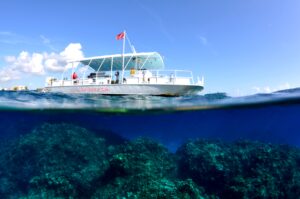
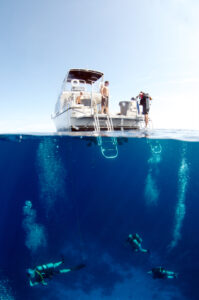
A typical Grand Cayman dive day is an easy half-day: a short boat ride to two sites, a surface interval between dives, and back in time for lunch. Bring a swimsuit, reef-safe sunscreen, a towel and your certification card; we supply tanks, weights and quality rental gear.
If you plan to dive on several days, a multi-dive package is the most cost-effective option — compare our dive packages and current rates. Boats depart from Seven Mile Beach; see our boats for capacity and amenities.
Frequently asked questions
Is Grand Cayman good for beginner divers?
Yes. Shallow reefs, calm water and warm temperatures make Grand Cayman one of the easier places to learn. Beginners can start with a guided introductory dive, and the gentle conditions are also ideal for completing an Open Water course.
What water temperature can I expect?
Water ranges from about 78°F in February to roughly 86°F in September. Most divers are comfortable in a 3mm wetsuit; in the warmest months a rash guard or skin is often enough.
How is the visibility?
Visibility in Grand Cayman commonly runs 60–100 feet and is among the best in the Caribbean. It is typically clearest in calm conditions from late autumn through spring.
Do I need my own gear?
No. Certified divers should bring their certification card, but tanks, weights and full rental equipment are available. Many divers bring only a mask and computer they trust.