Grand Cayman snorkeling tours are guided boat or catamaran excursions to shallow marine sites such as Stingray City, the North Sound coral reefs, and the USS Kittiwake wreck. Most trips run 2–4 hours, include mask, fins and snorkel, and depart from Seven Mile Beach or the North Sound. Morning departures give the calmest water and clearest visibility.
What are Grand Cayman snorkeling tours?
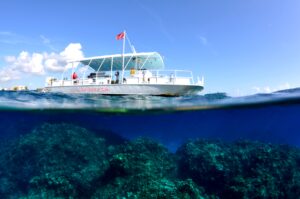
Grand Cayman snorkeling tours are guided in-water excursions, usually by boat or sailing catamaran, that take you to protected reefs, sandbars and wrecks around the island. A typical trip visits two or three stops in 2–4 hours. Because the North Sound is enclosed by a barrier reef, conditions are calm and forgiving, which makes the islands especially beginner-friendly. The official Visit Cayman Islands tourism board lists snorkeling among the destination’s signature marine activities.
- Where they go: Stingray City Sandbar, North Sound coral gardens, the Kittiwake wreck and Seven Mile Beach reef.
- How long: most Cayman snorkeling tours last 2–4 hours across two or three stops.
- What’s included: snorkel gear, a crew guide and usually drinks; bring reef-safe sunscreen and a towel.
- Best timing: morning trips, before the afternoon trade winds pick up.
- Who it suits: first-timers, families and confident swimmers alike, thanks to shallow, sheltered sites.
Where do snorkeling tours in Grand Cayman go?
Snorkeling tours in Grand Cayman focus on the sheltered North Sound and the west coast off Seven Mile Beach. The signature stop is Stingray City Sandbar, a natural shallow bank about 5 miles from shore where wild southern stingrays gather in waist-deep water. Nearby coral gardens and the Kittiwake wreck round out most reef and wreck snorkel routes. The table below compares the main sites Red Sail’s crews visit.
| Site | Typical depth | What you’ll see | Best for |
|---|---|---|---|
| Stingray City Sandbar | 3–4 ft (about 1 m) | Wild southern stingrays in waist-deep water | All ages, non-swimmers can stand |
| North Sound coral gardens | ~10 ft (3 m) | Reef fish, soft and hard corals | Families and easy reef snorkeling |
| USS Kittiwake wreck | From ~15 ft (4.6 m) at the top | Artificial-reef ship, from the surface | Reef and wreck snorkel fans |
| Starfish Point | Ankle- to waist-deep | Cushion sea stars on a sandy shallows | Young children and calm-water days |
| Seven Mile Beach reef | 10–20 ft (3–6 m) | Fringing reef and tropical fish | Snorkelers staying on the west coast |
You can explore the same reefs on scuba too; our overview of Grand Cayman dive sites maps how the snorkel spots connect to deeper wall dives.
What is a reef and wreck snorkel in Grand Cayman?
A reef and wreck snorkel in Grand Cayman combines a coral-reef stop with a pass over the USS Kittiwake, a 251-foot former US Navy submarine-rescue ship intentionally sunk off Seven Mile Beach on 5 January 2011 to create an artificial reef. The wreck’s superstructure sits as shallow as about 15 feet below the surface, so snorkelers and freedivers can see it clearly from up top without scuba gear (source: Wikipedia, USS Kittiwake).
Over the years the hull has grown a coating of sponges, corals and schooling fish, making it both a marine-life magnet and a photogenic silhouette. If the wreck sparks a deeper interest, many visitors move on to the full Kittiwake wreck dive or book Discover Scuba Diving to descend inside it with an instructor.
What’s included, and how much do Cayman snorkeling tours cost?
Most Cayman Islands snorkeling tours include mask, fins, snorkel, a crew guide, and often bottled water or soft drinks; sailing catamaran trips may add fresh fruit or a light snack. Prices vary by operator, trip length and whether the excursion is shared or private, so we quote current rates rather than fixed figures here — check live pricing on our rates page before you book. Private charters cost more than group departures but let you set the stops and pace.
To keep costs and hassle down, wear your swimsuit under your clothes, bring reef-safe sunscreen (regular sunscreen harms coral), and pack a dry bag for phones. Larger vessels are steadier for anyone prone to seasickness; see the fleet on our boats page to choose between a catamaran and a dive boat.
When is the best time for Grand Cayman snorkeling excursions?
The best time for Grand Cayman snorkeling excursions is the morning, typically before 11 a.m., when the water is glassiest and visibility often exceeds 60–100 feet before afternoon trade winds build small chop. Grand Cayman snorkels year-round thanks to warm Caribbean water that generally sits between 79°F in winter and 86°F in summer.
Peak tourist season runs December through April with the driest weather, while May to November is quieter and warmer, with a higher chance of afternoon showers during the June–November Atlantic hurricane season. Whatever the month, booking an early departure is the single easiest way to get calm seas and clear water.
Are Cayman Islands snorkeling tours good for beginners and families?
Yes. Cayman Islands snorkeling tours are well suited to beginners and families because the flagship sites are shallow and sheltered: the Stingray City Sandbar is only 3–4 feet deep, so non-swimmers can stand while wild rays glide past. Crews fit gear, give a safety briefing, and provide flotation vests or pool noodles for nervous first-timers and children.
If you want to build confidence before a trip, practice breathing through a snorkel in a pool and keep your movements slow and calm. Older or more adventurous visitors often pair a family snorkel with a scuba experience later in the trip — our dive trips range from first-timer sessions to certified boat dives on the walls.
What are the rules for snorkeling with stingrays?
You may only interact with the rays inside the two designated Wildlife Interaction Zones, the Sandbar and Stingray City, and licensed operators must hold an annual permit, according to the Cayman Islands Department of Environment. Wildlife Interaction Zone rules have been enforced since late 2007, and they are backed by the National Conservation Act.
Practically, that means supporting a ray gently over the water, never grabbing, chasing, or lifting one into the air, and following your guide’s lead. These rules protect a wild population that draws snorkelers from around the world, and choosing a permitted operator keeps your visit legal and low-impact.
Sources
- Cayman Islands Department of Environment — Stingrays and Wildlife Interaction Zones (enforced since late 2007), doe.ky
- Visit Cayman Islands (official tourism) — snorkeling and marine activities, visitcaymanislands.com
- Wikipedia — USS Kittiwake (sunk 5 January 2011; shallowest point ~15 ft), en.wikipedia.org