The best snorkeling spots in Grand Cayman are Eden Rock in George Town for tarpon and easy shore entry, the Stingray City Sandbar in the North Sound for wild southern stingrays, Coral Gardens for dense healthy reef, and Rum Point for calm, shallow water that suits first-timers and families.
What are the best snorkeling spots in Grand Cayman?
Grand Cayman’s standout snorkeling spots split into easy shore entries near George Town and boat sites in the North Sound. Eden Rock, Smith Cove, Macabuca and Rum Point work straight from the beach, while the Stingray City Sandbar and Coral Gardens need a short boat ride. Each offers different marine life, depth and conditions.
The island sits on the edge of the Cayman Trench, so clear, warm Caribbean water and protected reef are rarely far away. The Red Sail team picks sites here by access, depth and what you are most likely to see, so you can match a spot to your comfort in the water.
- Best for nervous first-timers: Smith Cove and Rum Point — calm, shallow, no boat traffic.
- Best for marine life from shore: Eden Rock, where schools of tarpon gather year-round.
- Best bucket-list experience: the Stingray City Sandbar, a designated Wildlife Interaction Zone.
- Best for healthy coral: Coral Gardens in the North Sound.
- Calmest conditions: mornings, before the afternoon trade-wind breeze builds.
How do the top snorkeling spots compare?
The quickest way to choose is by access and depth. Shore sites like Smith Cove and Eden Rock cost nothing and let you enter at your own pace, while the Stingray City Sandbar and Coral Gardens require a boat into the North Sound. The table below summarises the main Grand Cayman snorkeling spots and what each one is best for.
| Spot | Area | Access | Approx. depth | What you’ll see | Best for |
|---|---|---|---|---|---|
| Eden Rock | George Town | Shore (free) | 3–4 ft at entry, sloping to a deeper drop-off | Tarpon, reef fish, swim-throughs | Marine life from shore |
| Smith Cove | Near George Town | Shore (free) | Shallow, coral ~30 yds out | Reef fish, easy coral heads | Beginners |
| Macabuca | West Bay | Shore, ladder entry | Shallow to mid | Close-to-shore coral, tropical fish | Calm-day beginners |
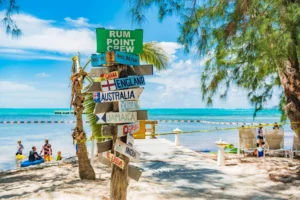
| Rum Point | North Side | Shore (free) | Shallow, gentle slope | Tropical fish, seagrass life | Families |
| Stingray City Sandbar | North Sound | Boat | Waist-deep (3–4 ft) | Wild southern stingrays | Bucket-list, all ages |
| Coral Gardens | North Sound | Boat | Shallow reef | Dense coral, schooling fish | Reef lovers |
Where can you snorkel from the beach in Grand Cayman?
The easiest shore snorkeling is at Eden Rock in George Town, where a ladder drops you into water about 3–4 feet deep that slopes to a deeper underwater drop-off. Large silver tarpon congregate here, and entry is free. It is one of the most accessible reefs on the island.
A few minutes away, Smith Cove offers calm, beginner-friendly water with a coral area roughly 30 yards offshore and no boat traffic. In West Bay, Macabuca sits a short drive north of Seven Mile Beach with dive ladders and close-to-shore coral. For turtle sightings, Spotts Beach, south of George Town, is best early in the day, when green turtles feed in the seagrass. These shore sites pair well with our guided snorkel and dive trips if you later want to go deeper.
What is snorkeling at Stingray City like?
The Stingray City Sandbar is a shallow sandbar in the North Sound where you stand in waist-deep water, about 3–4 feet, surrounded by wild southern stingrays. According to the Cayman Islands Department of Environment, it is one of only two designated Wildlife Interaction Zones in the Cayman Islands, the only places where interacting with and feeding the rays is permitted.
Nearby Coral Gardens has some of the healthiest, densest coral in the North Sound and dozens of reef-fish species. Both sites are boat-access only and usually calmest in the morning. Many visitors pair the sandbar with snorkeling over the reef from the same boat, so check our snorkel boats and current trip rates when you plan the day.
When is the best time to snorkel in Grand Cayman?
Snorkel in the morning for the calmest water and clearest visibility, before the afternoon trade-wind breeze builds chop on exposed coasts. Grand Cayman is a year-round destination, but the official tourism board, Visit Cayman Islands, notes the drier, calmer window runs roughly from late November to April. Water stays warm across all seasons.
Winter can bring a little surface chop at exposed spots like Rum Point, while sheltered George Town sites such as Eden Rock and Smith Cove tend to stay calm. If a north or east wind is blowing, switch to a leeward, west-facing spot the same day for better conditions.
How can you snorkel responsibly in the Cayman Islands?
Protect the reef by floating horizontally, never standing on or touching coral, and keeping fins clear of the bottom. The Cayman Islands Department of Environment restricts stingray feeding to the two Wildlife Interaction Zones at Stingray City and the Sandbar, where the rays may be fed only squid and ballyhoo, and only by the boat crew. Reef-safe sunscreen helps keep the water clean.
Stingrays are wild animals: support them gently underwater, never lift one out of the water, and let guides handle feeding. These small habits keep the sites healthy for the next group. The same conservation mindset shapes how we run our guided dive sites across the island.
Should you snorkel or learn to dive in Grand Cayman?
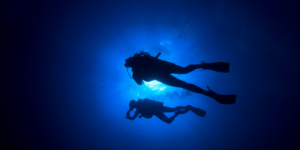
Snorkeling is the fastest way into Cayman’s marine life — no certification, no experience and minimal gear. But many of the island’s most famous features, like the deeper sections of the USS Kittiwake wreck off Seven Mile Beach and the North Wall drop-offs, sit below comfortable snorkeling depth. If the reef has you curious, a single guided session opens up that deeper world.
A no-certification Discover Scuba Diving session lets you breathe underwater in shallow, controlled conditions with an instructor, often on the same trip as your snorkeling. It is the natural next step from a mask and fins, and a low-pressure way to find out whether full certification is for you.
Sources
- Cayman Islands Department of Environment — Stingrays and Wildlife Interaction Zones, doe.ky/marine/stingrays/
- Visit Cayman Islands, official tourism board, visitcaymanislands.com